
Ocean vs Space Exploration: Which Is Harder and What We Still Don’t Know
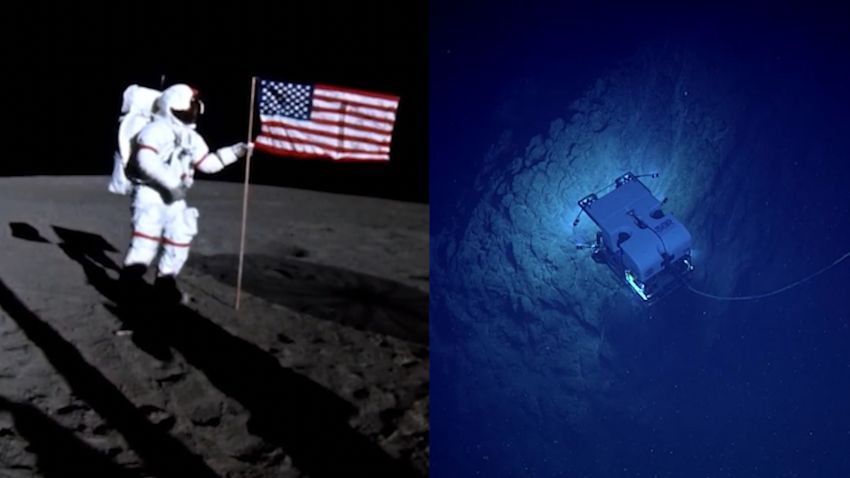
When you think of exploration, your mind might drift to rockets blasting off into the stars or submarines descending into the dark ocean depths. Both outer space and the sea floor represent some of the last great frontiers—but surprisingly, one is far less understood than the other.
At Crazy Sister Marina in Murrells Inlet, we’re all about connecting people with the ocean. But when you compare what we know about the deep sea versus outer space, things get pretty fascinating.
The Final Frontier… or Is It?
Outer space often gets the spotlight, especially with renewed excitement around missions like Artemis II, led by NASA. Artemis II aims to send astronauts around the Moon for the first time in over 50 years, building momentum for future lunar landings.
But here’s the surprising part:
We’ve actually mapped more of the Moon and Mars than we have of Earth’s ocean floor.
Scientists estimate that over 80% of the ocean remains unexplored. That’s right—the waters just off the South Carolina coast hold more mystery than distant planets.
Key Differences Between Ocean and Space Exploration
1. Pressure vs. Vacuum
Space is a vacuum—no air, no pressure. The ocean, on the other hand, becomes increasingly hostile the deeper you go. At extreme depths, pressure can exceed 1,000 times the atmospheric pressure at sea level.
That crushing force makes deep-sea exploration incredibly difficult. Submersibles must be engineered to withstand immense pressure, while spacecraft are built to handle the opposite—complete emptiness.
2. Accessibility
You might think space is harder to reach—and in some ways, it is. But once you’re there, it’s easier to observe vast distances with telescopes and satellites.
The ocean floor? Not so much.
Water blocks light and limits visibility. Even advanced sonar mapping can’t capture everything in detail. It’s like trying to explore a dark, moving world with a flashlight that barely cuts through the fog.
3. Cost and Technology
Both types of exploration are expensive, but space missions tend to get more funding and attention. Programs like Artemis II capture global interest, driving innovation and investment.
Meanwhile, ocean exploration often flies under the radar—even though it directly impacts climate science, marine ecosystems, and coastal communities like Murrells Inlet.
Surprising Similarities
Despite their differences, exploring the ocean and space share some common ground:
- Extreme Environments: Both require specialized equipment and training to survive.
- Robotics Play a Huge Role: From Mars rovers to deep-sea drones, unmanned technology leads the way.
- Unknown Life Forms: Just as scientists search for life beyond Earth, they’re still discovering new species in the deep ocean.
- Navigation Challenges: GPS doesn’t work underwater, just like it doesn’t work in deep space.
Why the Ocean Might Be Harder to Study
It sounds counterintuitive, but many scientists argue that the ocean is actually more difficult to explore than space.
Here’s why:
- Constant Motion: Ocean currents and shifting seafloors make mapping unpredictable.
- Limited Visibility: Sunlight only penetrates about 650 feet below the surface.
- Crushing Pressure: Equipment failures are far more likely under extreme pressure than in zero gravity.
In contrast, space—while vast and dangerous—offers clearer observation opportunities with powerful telescopes and satellites.
Bringing It Back to the Coast
At Crazy Sister Marina, we may not be launching rockets, but every time you step onto a boat, you’re entering a world that’s still largely unexplored.
Whether you’re dolphin watching, fishing, or cruising through Murrells Inlet, you’re experiencing a small slice of a massive, mysterious ecosystem. Beneath the surface lies a world that scientists are still working to understand—much like the distant worlds Artemis II hopes to explore.
Fun Fact to Impress Your Crew
- We have better maps of Mars than of Earth’s ocean floor.
- Some deep-sea creatures produce their own light—something scientists study for clues about life on other planets.
- The deepest part of the ocean, the Mariana Trench, is deeper than Mount Everest is tall.
The Adventure Never Ends
Whether it’s the excitement surrounding Artemis II or the mysteries beneath the waves, exploration is far from over. Both the ocean and space remind us how much there is still to discover.
And the next time you’re out on the water with Crazy Sister Marina, just remember—you’re floating above one of the least explored places on Earth.